



Skip to content
Resource_Centre_600x320

Practical resources for navigating compliance, testing, and global market access.

Blog_writing_600x320

Expert insights on compliance, testing, certification, and evolving regulatory requirements.

Certificate_Finder_600x320

Verify certificate authenticity and certification status through Nemko’s online platform.

Locations_600x320

Find Nemko locations worldwide and connect with local experts for testing, certification, compliance, and global market access services.

Robotics Engineering Facility

Functional safety

More and more devices, machinery, plants and systems contain electrical, electronic and/or programmable electronic systems and components. Malfunctions – also in sub-systems and components – can lead to hazardous situations for people, machines and the environment. If these systems contribute to the safety of the product, it is necessary that they function correctly under all circumstances (including possible failures and malfunctions). One speaks of functional safety in this context.

Contact Us for Help

When considering this matter, it quickly becomes clear what catastrophic effects a lack of functional safety can have. Accidents like the one in Seveso in the decade of the 1970s have sunk themselves deeply into the memory and were, among other things, an occasion to deal more intensively with the problem of random and systematic errors as well as their early detection and elimination. The foundation stone for new international standards was laid and legislation was strengthened.


Recognizing and minimizing risks

A rapid increase in digitization and automation in all areas of life enables smart homes, smart cities and the Internet of Things (IoT). On the other hand, the challenges of keeping up with the state of standardization, technology and scientific knowledge in terms of safety and reliability are increasing. Functional safety is no longer just about the point of time that the product is placed on the market - rather, functional safety (FuSa) is a product characteristic that must be taken into account during the entire life cycle of machinery, systems, vehicles and safety elements.

Over 80% of innovations today are based on electrical, electronic and programmable electronic sub-systems (E/E/PE) and components. Their deployment takes place in all areas, such as, for example:

  • Automotive, aviation, rail, shipping, machinery, mobile machinery as well as agricultural machinery and tractors
  • all types of machinery in the industrial - as well as in the consumer sector
  • small components such as relays or large industrial plants


If these E/E/PE sub-systems are to contribute to product safety, they must function correctly and reliably under all circumstances. As the overall system must be functionally safe. Safety is understood to mean a situation in which the risk is not higher than the marginal risk, whereby the marginal risk is the greatest risk that is still acceptable. The functional safety is part of the overall safety, related to the facility to be controlled or regulated and also the guidance or control system. It depends on the correct functioning of the safety-related system, safety-related systems of other technologies and external facilities for risk reduction.

A safety-related system, safety-related systems of other technologies or external facilities serve to reduce risk.


What are the legal frameworks like?

A product, that must correspond to the state of scientific knowledge and technology and thus must meet the “latest scientifically justifiable knowledge", is subject to considerably stricter requirements for the required safety than a product that “only” has to conform to the state of technical knowledge. In this respect, compliance with the state of technical knowledge required in the law on placing on the market may not be enough in the case of product liability.

As with the state of technical knowledge, the Third Edition of the Manual of Legal Form (HdR-Manual of Legal Form) no longer contains a reference to the cost-effectiveness of the solution. As a result, from a legal point of view in the area of hazard prevention, commercial aspects do not play a role (any more) as part of the proportionality considerations. This has priority over commercial considerations in the area of precaution.

Legal framework conditions

For product manufacturers, these rules are decisive for compliance with the Product Liability Directive 85/374/EEC or its national implementation, the Product Liability Act – ProdHaftG.

Recognized rules of technology

In the European internal market regulations as well as in § 4 ProdSG (Product Safety Act) reference is made to harmonized standards, compliance with which triggers a so-called “presumption of conformity”.
• These standards are considered to be "generally recognized rules of technology".
• Unfortunately, no explanation is to be found of this term in these legal provisions.
A definition can be found in the Manual on Legal Form – Chapter 4.5.1 MarginalNote Number 255 - Manual of Legal Form:

"Generally recognized rules of technology are written or verbally handed down technical specifications for processes, facilities and operating modes which, according to the prevailing opinion of the parties involved (experts, users, consumers and the public sector), are suitable to achieve the legally prescribed goal and which have generally proven themselves in practice or which, according to the prevailing opinion, is imminent in the foreseeable future."

State of technical knowledge

The state of technical knowledge is required by lawmakers in various legal provisions with regard to product characteristics.

Example: The Machinery Directive requires this as part of the requirements for safety and health protection.

The content of the explanation in the guideline of the Machinery Directive largely coincides with the definition of the state of technical knowledge in the Manual of Legal Form, Chapter 4.5.1 Marginal NoteNumber 256:

“The state of technical knowledge is the level of development of progressive processes, facilities and modes of operation, which, according to the prevailing opinion of leading experts, makes the achievement of the legally prescribed goal appear assured. Procedures, facilities and operating modes or comparable procedures, facilities and operating modes must have proven themselves in practice or – if this is not yet the case – should have been successfully tested in operation if possible. "

State of scientific and technical knowledge

The state of scientific knowledge and technology can be found in product liability legislation, the European basis for which is the Product Liability Directive 85/374/EEC. Unfortunately, it is not defined in the Product Liability Directive!

The 85/374/EEC document makes the manufacturer's liability dependent on whether they have complied with the state of scientific and technical knowledge by stating the following in Article 7:
“The producer shall not be liable as a result of this Directive if they prove, (...)
e ) that the state of scientific and technical knowledge at the time when they put the product into circulation was not such as to enable the existence of the defect to be discovered."

Manual of Legal Form - Chapter 4.5.1 Marginal Note-No. 257:
“The state of scientific and technical knowledge is the state of development of the most progressive processes, facilities and operating modes, which, in the opinion of leading experts from science and technology, on the basis of the latest scientifically justifiable knowledge, are deemed necessary with regard to the legally prescribed goal and the achievement of this goal make it appear secure."

Which standards need to be taken into account?

Since functional safety plays a role in a large number of products and applications, there are general explanations of the approach as well as very specific product standards that are tailored to their particular hazard potential.

  • EC Machinery Technology Directive IEC 61800-5-2, IEC 62061, ISO 13849
  • Robotics EN 10218, ISO TS 15066, ISO13482 Personal Care Robots,
  • Laboratory equipment IEC 61010-x
  • Process technology IEC 61511
  • Medical devices EN60601-x
  • Household appliances, Smart Home EN IEC 60335 / EN 60730 / IEC 62368-1
  • Railway technology EN 5012x

The 61508 series of standards, which deals with the functional safety of safety-related electrical/electronic /programmable electronic systems, is of particular importance. One aim of this standard is to enable the development of safety-related E/E/PE systems for which no product or application-specific international standards exist.

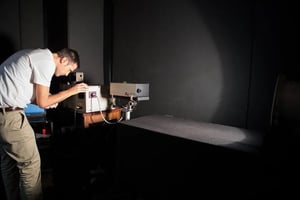
Functional Safety Standards for Products

How can Nemko support you with functional safety?

  • Workshops and training on functional safety
  • Pre-Compliance Service in all phases of the safety life cycle
  • Moderation and assessment of hazard analyzes, determination of the required safety goals, the safety functions and the required safety integrity level (SIL level)
  • Process and GAP analysis
  • Testing and validation of the safety functions and their safety integrity levels
  • Certification of your products and systems
  • Information on the status of standards and decisions, webinars and newsletters etc.

Related Pages


Compliance made clear

Compliance requirements can slow progress and create unnecessary risk. Nemko integrates compliance into the product development process to help teams reduce rework, simplify approvals, and move products to market with confidence.

Product testing

Product Testing

Make sure that risk and safety are taken care of by our internationally accredited organisation of engineers and testing laboratories.

Product certification

icon 02 - blue

As your certification partner, we provide certification marks that cover numerous multinational and national certification schemes.

Global market access

nb-nk-blue-icon-4

Conquer global markets with confidence—uncover the regulatory requirements for your target market here. 

Cyber assurance

Nemko_Cyber_security_logo_-_RGB_-_color

Our cyber security team helps you understand your cyber risk levels so you can efficiently and effectively protect your assets.

Management system certification

Management System Certification

Our highly experienced auditors provide accurate and insightful audit results to help you achieve management system certification.

Pre-compliance testing

Pre compliance Testing

Save your company valuable time and money by involving Nemko early in the product development process.

Field evaluation and special inspection services

Field Evaluation

As a Nationally Recognized Test Laboratory (NRTL), Nemko offers Field Evaluation and Special Inspection Services as a fast and economical alternative to traditional product safety certification.

Upcoming Events

Cybersecurity by Design: Preparing Connected Products for Global Compliance

Nemko Italy Customer Seminar 2026

Italy AI Training

Compliance without Complexity - SPS in Nürnberg

Other posts you might be interested in

Functional Safety

For more information

about how Nemko can help your organization meet current and emerging cyber security challenges
Contact Us for Help